Overview
About Alfama.
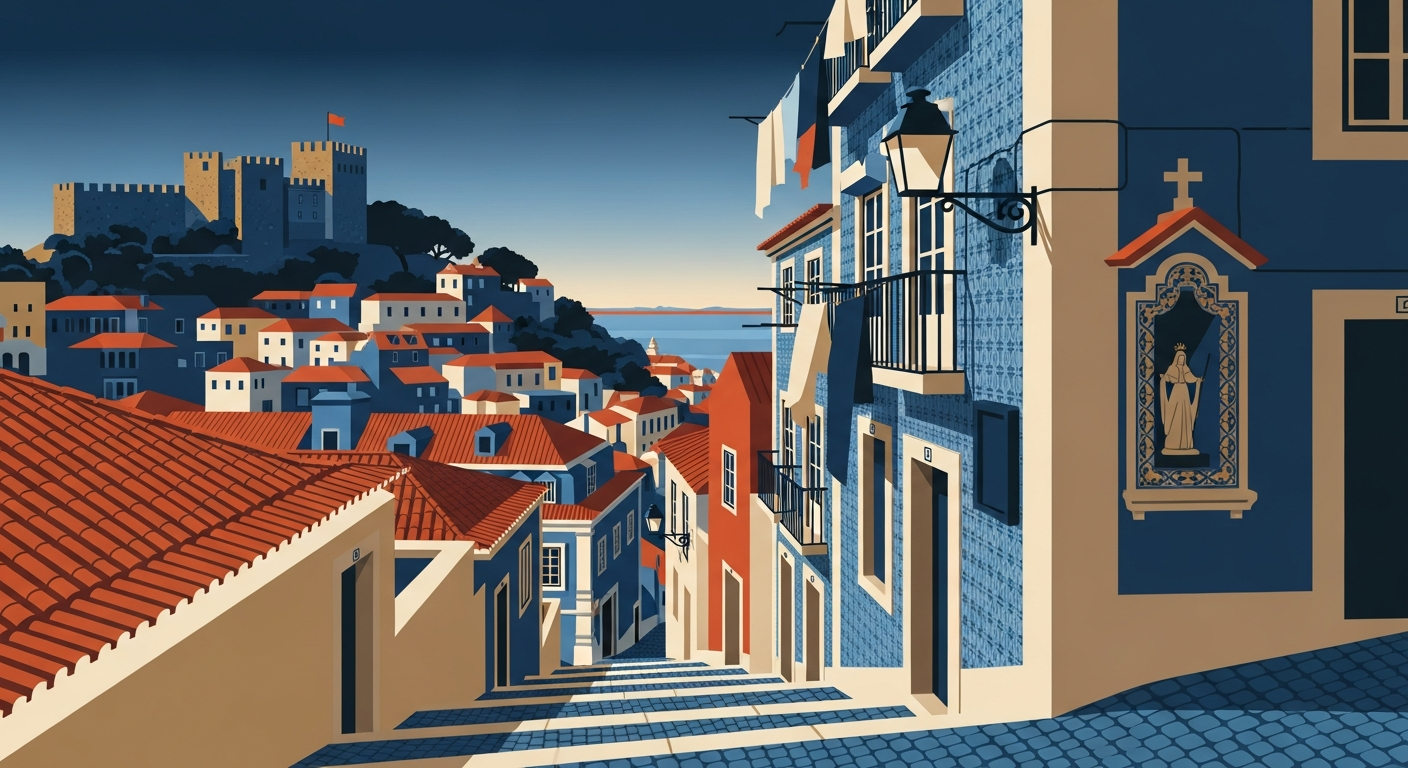
Alfama survived the 1755 earthquake largely intact, which is why it looks and feels different from the rest of central Lisbon. Its streets follow medieval lines rather than the Pombaline grid, climbing the eastern flank of the castle hill in a dense knot of staircases, arches and courtyards. Buildings are small-footprint, often three or four storeys, with tiled façades, wrought-iron balconies and occasional private patios hidden behind. The neighbourhood contains some of Lisbon's most important landmarks — the Sé cathedral, the Castelo de São Jorge, the Casa do Fado — and a dense concentration of fado houses, miradouros and small restaurants that still serve locals as much as visitors. Property here is its own category: period apartments with extraordinary character, low ceilings in some, extraordinary views in many, and renovation histories that vary enormously. Short-let demand is among the strongest in Lisbon; long-term resident buyers are fewer but deeply committed. Car access to many streets is impossible, which is both a trade-off and, for many buyers, part of the appeal.